| York County's proposed $308.2 million budget for the next fiscal year would maintain the current real estate property tax rate but follow in the City of Williamsburg's footsteps by increasing the meals tax.
Mark Bellamy, the county's administrator, presented the preliminary budget to the Board of Supervisors last Tuesday.
While the current real estate property tax rate - $0.78 per $100 of assessed value - would stay the same, homeowners are facing a hike in taxes amid another recent jump in property values per the most recent assessments.
The overall increase in assessed values is 11.4%, according to the county.
"2026 is a reassessment year, and the reassessment reflects the continued strength of the county's residential housing market," Bellamy said, adding that the values "generally align with today's market conditions."
Residents with homes valued at $450,000, which is about the county's median home value, will pay about $28 more a month in taxes compared to the prior fiscal year.
While Bellamy portrayed the increased assessments in a positive light, county homeowners have taken to social media to express their frustration over the related upcoming tax hike. Some said their property taxes have jumped dramatically.
"Just got notice of a 24% increase from last year," one resident said, sharing a copy of their latest assessment statement. "[Our] annual property tax has doubled since purchasing in York County in 2023."
Another resident expressed concern that the area's rising cost of living is "driving out the fixed-income residents."
Conserve York County Foundation, a grassroots organization that advocates against overdevelopment in the Historic Triangle, said the newest assessment increases are "a clear signal of where things are heading" for many local families.
"Rising assessments come at a time when residents are already feeling the strain of growth driven decisions," the group said in a Facebook statement. "More development brings higher demands on roads, schools, utilities and services, and those costs do not fall on developers. They fall on taxpayers."
Bellamy argued that despite the recent increases, real estate tax burdens in York County are among the lowest in the Peninsula localities, second only to Isle of Wight County.
Meals tax would increase to 6%, the maximum allowed in any county
County data shows the higher assessment values will generate an additional $8.9 million in revenue for the county in fiscal year 2027 compared to last year.
Nonetheless, Bellamy said additional tax increases are still necessary to offset other rising expenses.
The general fund of $214.7 million is 7.3% higher than the prior year, driven by higher costs for schools, employee compensation, public safety and general operations.
That's where the proposed meals tax hike comes in.
By increasing the tax on prepared food to 6%, up from the current 4% rate, the county would "diversify its revenue base while reducing pressure on property taxes," Bellamy said.
If the proposal is implemented, the levy on prepared food would rise to the maximum allowed in any county, per the Code of Virginia. The combined meals tax rate would equal 13% when the state sales tax of 6% and Historic Triangle tax of 1% are factored in.
A $50 restaurant check, for example, would come with a tax of $6.50.
As previously reported by The Triangle, Virginia localities have some of the highest meals taxes in the U.S., with the City of Williamsburg now nearing the top of nationwide lists.
York County's combined meals tax would be slightly lower than the City of Williamsburg's 13.5%, which went into effect in January 2026, despite strong pushback from city restaurant owners.
State proposal could allow York, James City to charge admissions tax
In addition to the meals tax increase, the implementation of an admissions tax could be on the table for York County in the near future, pending the approval of proposed General Assembly legislation.
Current law bars York and James City counties from charging an admissions tax, but the Virginia Senate recently backed a measure that would overturn this restriction, allowing both localities to create a new revenue stream.
Under the proposed bill, sponsored by Sen. Danny Diggs (R - York), James City and York counties could be allowed to "levy a tax on admissions charged for attendance at any event," not to exceed 10% of the admission price.
"The only counties currently disqualified from being able to levy [an admissions tax] are James City and York because of the additional one percent state sales tax that is levied in the Historic Triangle," an impact statement submitted along with the proposal explains.
If approved, the new legislation would go into effect on July 1, 2026, just days before the official 250th anniversary of the United States.
The City of Williamsburg implemented a new admissions tax of 10% earlier this year, but the ordinance was amended at the last minute to include a tax cap of no more than $1 per event ticket.
Collective bargaining law could also impact local budgets
The Virginia General Assembly recently sent a bill to Gov. Abigail Spanberger's desk that would allow state and local employees to unionize.
Bellamy said the measure, HB2764, could have "significant fiscal implications" on the county by leading to further increases in employee-related costs.
Additional budget features: Higher garbage and recycling fees, more money for schools
Here's a rundown of some of the other proposals in the budget that would impact residents.
Garbage & recycling increases
Under the proposed budget, the combined garbage and recycling bimonthly rate would increase from $70 to $72, while garbage-only service would jump from $50 to $55. Recycling-only service would rise from $28 to $32.
Low-income county residents would not be subject to a rate adjustment under the proposed budget. However, seniors would face an increase of $3 bimonthly for trash and recycling combined, from $52 to $55. The cost for additional bins would also go up by $6 bimonthly, from $26 to $32 each.
Sewer utility rate increase
Under the new proposal, single-family residential homes would pay a flat $57 bimonthly sewer fee, up from the current rate of $54.
Commercial customers would see their rate change from $4.82 per kGal to $5.29 per kGal, plus a $60 flat fee, bimonthly.
Employee compensation increases
The budget includes an additional $8.2 million in employee compensation increases. More than 60% of those increases would be given to public safety officials. Six new public safety positions would also be created.
"This budget prioritizes competitive compensation to attract and retain dedicated employees," Bellamy said, adding that the county's strength is directly connected to its employees.
Continued tax relief for disabled veterans
The popularity of the county's disabled veterans real estate tax exemption has continued to grow, amounting to an expected total of $5.5 million in tax relief in 2026, up from $5.1 million during the previous year.
"We have one of the largest concentrations of veterans in the state," Bellamy said.
More spending on schools
The budget includes an additional $1.2 million for York County School Division to support "instructional and operational needs."
The Capital Improvements Program (CIP) for the 2027 fiscal year also features $26.7 million in school project funding to ensure that county educational facilities "remain modern, safe and conducive to learning."
What's Next
A series of public hearings will be held to allow residents to weigh in on the proposed budget.
The Board of Supervisors will hold its next work session on March 24. Two town hall/listening sessions will follow: -
March 31 at the Griffin-Yeates Center (1490 Government Road, Williamsburg) from 7 - 9 p.m., and -
April 2 at the York-Poquoson Sheriff's Office Community Room (159 Goodwin Neck Road, Yorktown) from 7 - 9 p.m. Neither of the listening sessions will be televised.
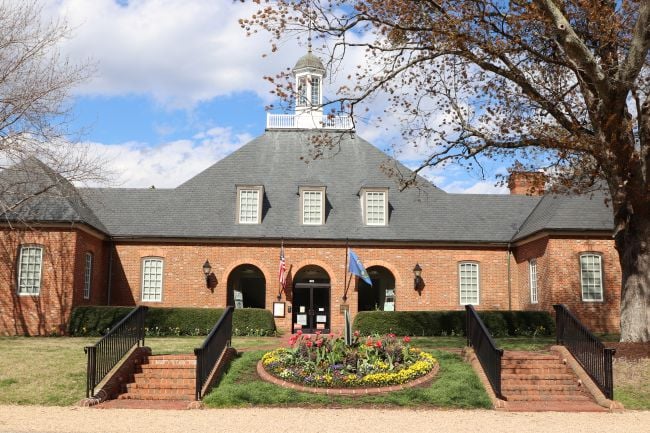
A Board of Supervisors Work Session to include public hearings on the budget will also take place on April 7 at York Hall (301 Main Street) from 7 - 9 p.m.
Budget adoption is set to take place on May 5. The full budget is available online for review at yorkcounty.gov/budget. | 


No comments:
Post a Comment